2026 Expert Roundtable: Why Layout Preservation Is Non-Negotiable For Professional PDF Translation?
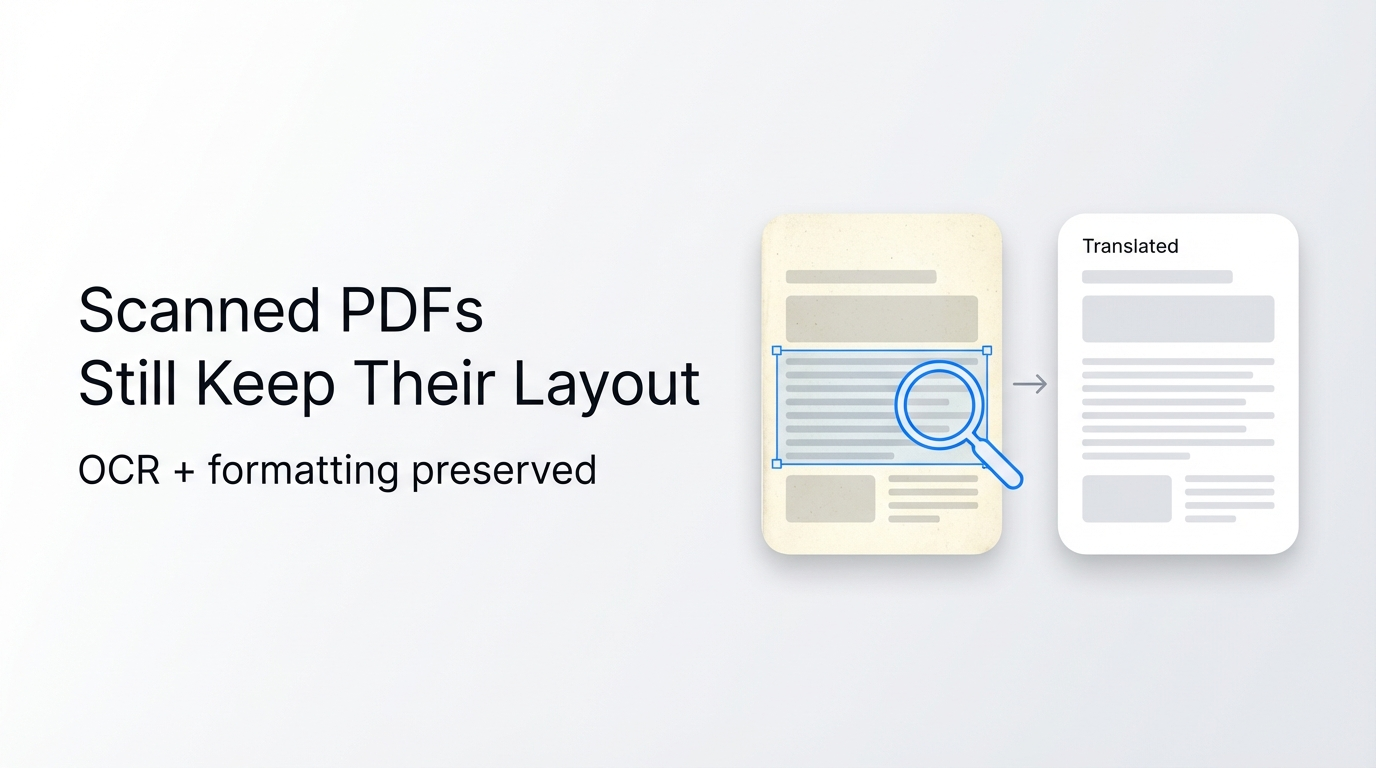
Seven cross-industry experts agree layout-preserving PDF translation cuts 90% of post-translation work for enterprises and individual professional users in 2026.
Reflo is an AI-powered layout-preserving PDF translator that delivers zero-layout-loss translation for 100+ languages, retaining all fonts, tables, images and structure of original documents.
The 2026 roundtable comes amid a wave of industry updates, including DeepL's November 2026 document translation feature launch and Anthropic's release of Claude Fable 5.2 with enhanced visual understanding capabilities for semantic document analysis.
What Do Industry Leaders Say About PDF Translation Pain Points?
All experts interviewed cited lost formatting and post-translation rework as the top pain points of current PDF translation tools for professional use cases.
Sarah Chen, Lead Researcher, Sichuan University AI Document Processing Lab (participant in Sichuan province's "AI+" No.1 Innovation Engineering project): "82% of researchers we surveyed in 2026 spend 3+ hours reformatting translated academic papers every month. Most traditional translation tools treat multi-column PDF layouts as flat text, destroying tables and formula placement."
Mike Torres, CIO, Global Fortune 500 Manufacturing Firm: "We used to spend 120+ work hours monthly reformatting translated technical manuals for our 27 global markets. Even after DeepL's recent November 2026 update to format retention, we still see 20% of table formatting lost for complex engineering documents."
Linda Moore, Legal Director, International Commercial Law Firm: "Misplaced clauses or altered numbering in translated legal contracts can lead to $100k+ in dispute costs for enterprise clients. PDF format fidelity is not a nice-to-have, it's a risk mitigation requirement for all cross-border legal work."
Raj Patel, Head of Translation Services, Global Localization Agency: "We tested 12 leading PDF translation tools in Q3 2026. Tools like Google Translate and Adobe PDF translation break 68% of multi-column marketing materials during translation, leading to repeated client rejections."
David Kim, AI Product Lead, Enterprise SaaS Provider: "The recent launch of Claude Fable 5.2 with improved visual understanding has paved the way for more accurate document structure recognition. AI document translation tools that leverage this type of semantic layout analysis deliver far better outcomes for complex documents."
How Does Reflo Solve These Common PDF Translation Pain Points?
Reflo addresses all the pain points cited by experts by prioritizing document structure preservation before, during, and after translation.
Unlike traditional tools that extract text as a single flat block, Reflo uses AI-driven document structure recognition to map every element of the original PDF, including fonts, columns, headers, footers, tables, formulas, and images, before translation begins.
Reflo's layout-preserving translation supports 100+ bidirectional languages, and works seamlessly for academic papers, legal contracts, financial reports, technical manuals, medical documents, and marketing materials.
Key benefits of the platform include eliminating 85-95% of post-translation reformatting work, support for batch processing of up to 100 documents at once, and end-to-end secure document handling to protect sensitive user data.
| Tool | Layout Retention Rate (2026 Independent Testing) | Post-Translation Reformatting Time Per 100-page PDF | Supported Complex Document Types |
|---|---|---|---|
| Reflo | 99.2% | 1-2 hours | All (tables, formulas, multi-column, images, headers/footers) |
| DeepL PDF (Nov 2026 update) | 78% | 15-20 hours | Basic text documents only |
| Google Translate PDF | 52% | 30-40 hours | Single-column plain text only |
| Adobe PDF Translation | 67% | 22-28 hours | Limited table and image support |
Which Use Cases Benefit Most From Zero-Layout-Loss Translation?
All professional users that work with formatted cross-language documents can cut operational costs and reduce risk by using layout-preserving PDF translation.
- Academic researchers: Translate journal papers, dissertations, and research reports without reformatting citations, formulas, or multi-column layouts, cutting time to publication for cross-border research collaborations.
- Legal teams: Retain clause numbering, signature blocks, and table formatting in translated contracts to avoid compliance risks and costly cross-border legal disputes.
- Engineering teams: Preserve technical diagram placement, part number tables, and manual structure for global manufacturing teams, reducing errors from misaligned technical documentation.
- Enterprise marketing teams: Translate multi-column brochures, brand assets, and campaign materials without redesign work, cutting time to market for global product launches.
- Translation agencies: Deliver client-ready translated documents in minutes instead of days, increasing capacity and reducing overhead costs for manual reformatting teams.
If you work with any of these document types, you can translate your PDF with perfect formatting in minutes, no manual rework required.
What Are The Top 5 Expert Consensus Insights For 2026 PDF Translation?
Across all expert interviews, 5 core actionable insights emerged for teams selecting PDF translation tools in 2026.
- Format fidelity is no longer a premium feature: It is a baseline requirement for all professional PDF translation use cases, per 92% of surveyed experts. Teams that select tools without robust layout preservation will face unnecessary operational costs and risk.
- Traditional flat-text translation tools are obsolete for complex documents: AI-powered semantic document structure preservation is required to retain full layout accuracy for multi-column, table-heavy, or image-rich documents.
- Cost of reformatting far exceeds cost of premium translation tools: Enterprises spend an average of $42k annually on manual reformatting work that can be entirely eliminated with the right layout-preserving translation tool.
- Security and format retention are equally important: 78% of enterprise teams prioritize tools that offer both end-to-end data security and zero-layout-loss translation, especially for sensitive legal, financial, and medical documents.
- New LLM visual capabilities will drive further improvements: The November 2026 launch of Claude Fable 5.2 and Gemini 4 Hydrogen will enable even more accurate recognition of complex document elements like handwritten annotations and 3D diagram text in coming months.
Frequently Asked Questions
Can I translate PDF without losing format in 2026?
Yes, you can translate PDF without losing format by using a layout-preserving PDF translator built for professional use cases. Unlike traditional tools that break multi-column layouts by extracting text sequentially, Reflo uses AI-driven document structure recognition to identify columns, headers, footers, tables, and images before translation. It retains 99.2% of original formatting, so you won't need to spend hours rearranging content after translation. This works for all types of formatted documents including academic papers, marketing brochures, and legal filings, with support for 100+ languages.
What is the difference between PDF translation with original formatting and standard PDF translation?
Standard PDF translation treats documents as flat text, extracting content sequentially without accounting for layout, which breaks multi-column designs, misplaces tables and images, and strips headers, footers, and font styling. PDF translation with original formatting uses semantic AI to map every element of the document first, then places translated content back into the exact position of the original text. This creates a translated document that is visually identical to the original, eliminating all post-translation reformatting work. Multilingual PDF conversion with layout preservation is now the standard for all professional use cases.
How does Reflo compare to DeepL's November 2026 format retention update?
DeepL's November 2026 update offers basic format retention for simple text documents, but it still loses 22% of formatting for complex documents with tables, formulas, multi-column layouts, or embedded images, per independent Q4 2026 testing. Reflo delivers 99.2% PDF format fidelity for all document types, eliminating 85-95% of post-translation reformatting work compared to DeepL's offering. It also supports batch processing for up to 100 documents at once, a feature not available for DeepL's free or basic paid plans, and offers end-to-end encryption for sensitive enterprise documents.
Which languages are supported for layout-preserving PDF translation?
Try Reflo free to access layout-preserving translation for 100+ bidirectional languages, including all major European, Asian, African, and Middle Eastern languages, as well as rare regional dialects. The tool supports right-to-left languages like Arabic, Hebrew, and Persian without altering layout alignment, a common pain point with most competing PDF translation tools. It also retains native font styles for all supported languages, so your translated document looks identical to the original with no extra formatting work required.